

Materials
Our water slides are manufactured from the highest-quality materials to exceed our customers' expectations. The materials we use include stainless steel and glass-fiber-reinforced plastic (GFRP), both of which are valued for their unique properties and advantages in water slide construction.
Stainless steel
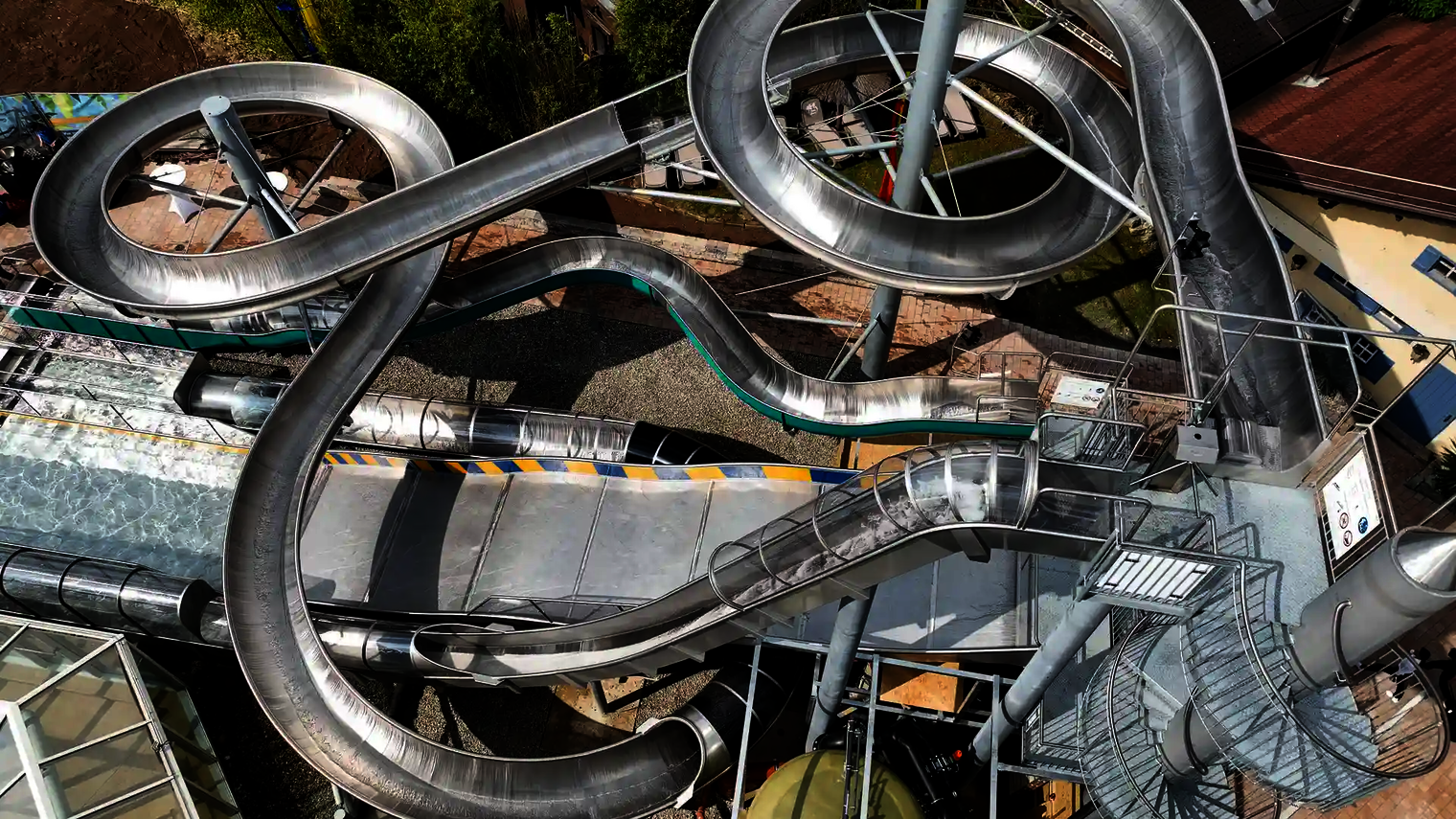
This material is the very essence of sturdiness and durability. Our stainless steel slides are virtually maintenance-free and feature a smooth, seamless surface that ensures a smooth and enjoyable sliding experience. Made from stainless steel sheet metal, these water slides are typically 2.00 to 3.00 mm thick. They are resistant to color fading and weathering caused by the sun and chlorine. Furthermore, stainless steel is fully recyclable, making this option particularly environmentally friendly. All parts are seamlessly welded using stainless steel filler metal. The seams are then ground and polished.
- Seamless welding of the segments
- Seamless, smooth sliding surface
- Corrosion- and wear-resistant
- High-quality appearance
- High material value
- virtually unlimited service life
- Resistant to extreme temperatures
- Low operating costs
- Virtually maintenance-free
- Deep-drawn curved parts
- Environmentally friendly

Wiegand
Deep-drawn stainless steel curves
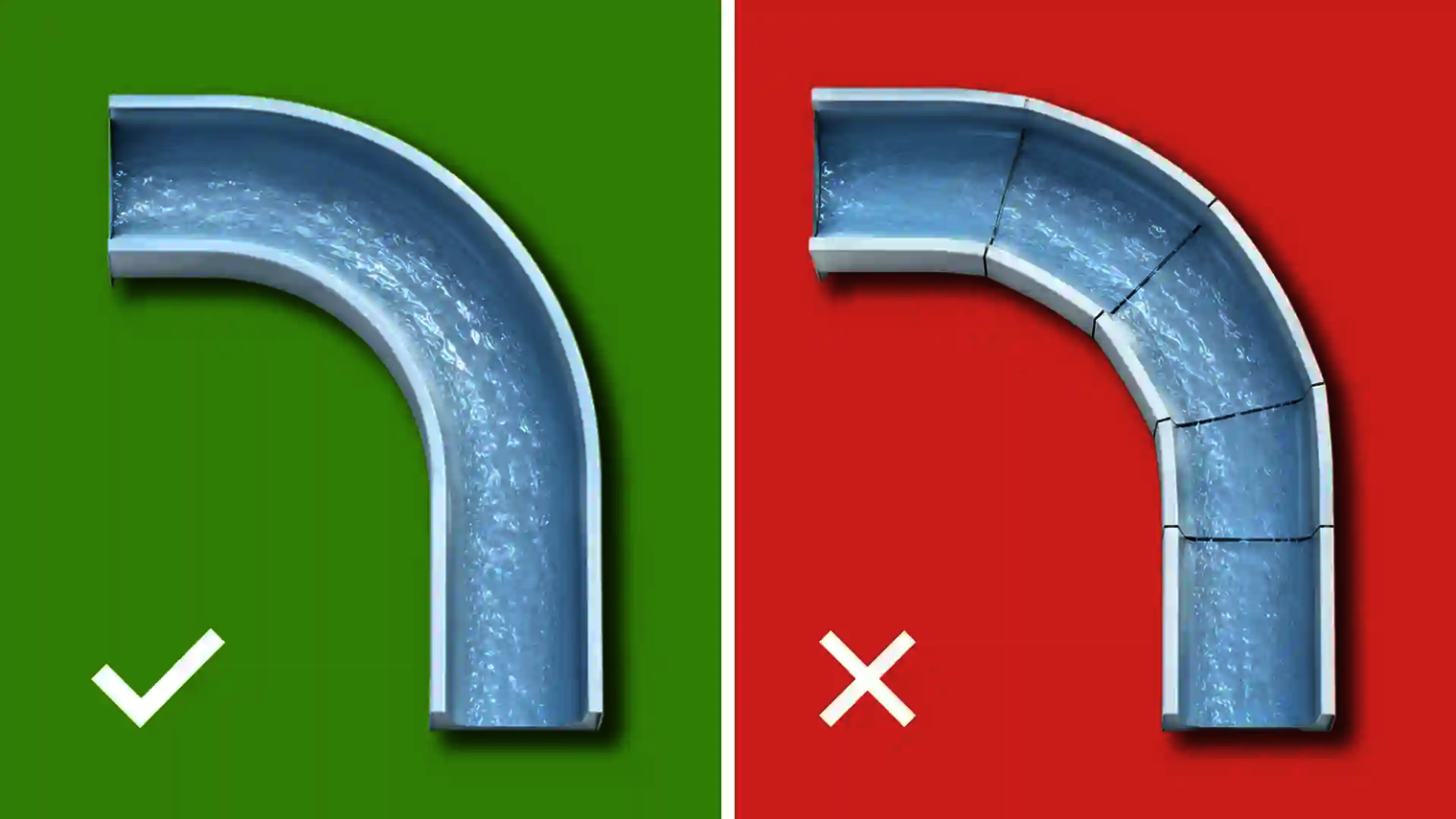
A key advantage of a Wiegand stainless steel slide is our deep-drawing process. Since 1996, we have relied on deep-drawn stainless steel components—a standard that continues to set the bar today. This special deep-drawing process produces three-dimensionally formed, exceptionally smooth sheets. The result is a virtually seamless sliding surface that provides an exceptionally comfortable and smooth sliding experience. Unlike conventional designs, the slide runs without noticeable transitions: sudden jolts or bumpy sections are avoided, and instead, users experience a smooth, even ride down the slide. Another key quality factor is the workmanship: The individual elements are precisely welded, and the slide surface is carefully sanded. This ensures there are no disruptive seams—a clear advantage over solutions where curves are assembled from straight segments using angled cuts.
Deep-drawn curves are available on the following model: WR1040

GFRP
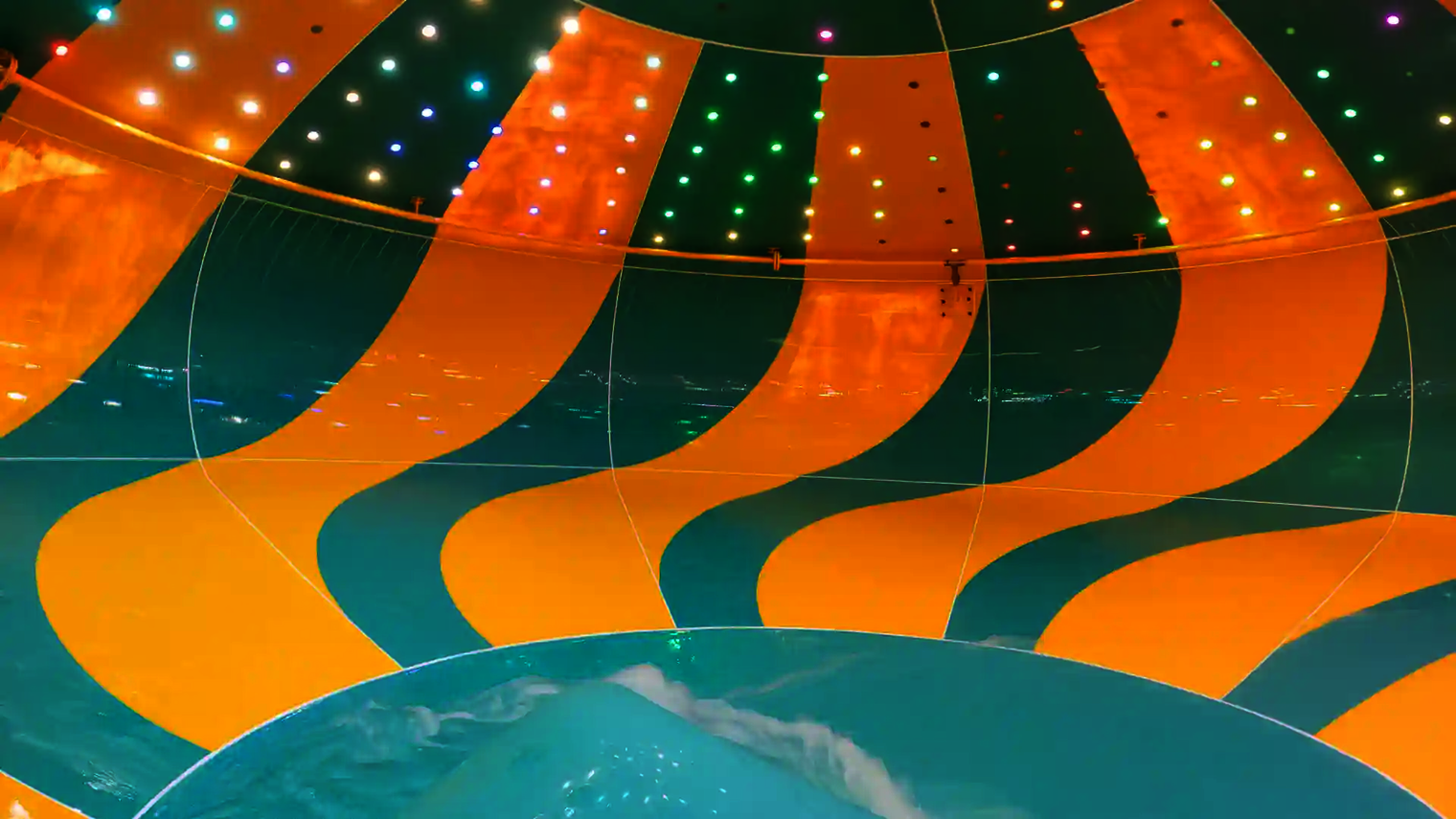
FRP (fiberglass-reinforced plastic) offers exceptional flexibility in design and configuration. This material allows us to create water slides whose shape and theme are fully tailored to our customers’ wishes. Manufacturing is carried out using the hand-layup process to produce a random-fiber laminate with a glass content of at least 35%. The wall thickness is typically between 6 and 12 mm. Compared to products with thinner walls, our products are particularly sturdy and therefore durable. All slide elements and joint connections are manufactured using a non-slip connection system in the form of a tongue-and-groove joint. This ensures that transitions between elements are barely noticeable while sliding. All screw connections are hot-dip galvanized. The slide elements and joints are resistant to pool water and standard household cleaning agents. With GRP, we can take advantage of greater design flexibility and create a wide variety of shapes that go beyond classic slides. Whether it’s recreating a mystical river or designing a slide in the shape of a dragon—GRP makes it possible.
- greater design flexibility
Hard or Soft Grouting
When connecting GRP slide components, two different types of jointing are generally used: hard jointing and soft jointing. Both systems have specific advantages and are suitable for different applications depending on the requirements.
Hard Jointing
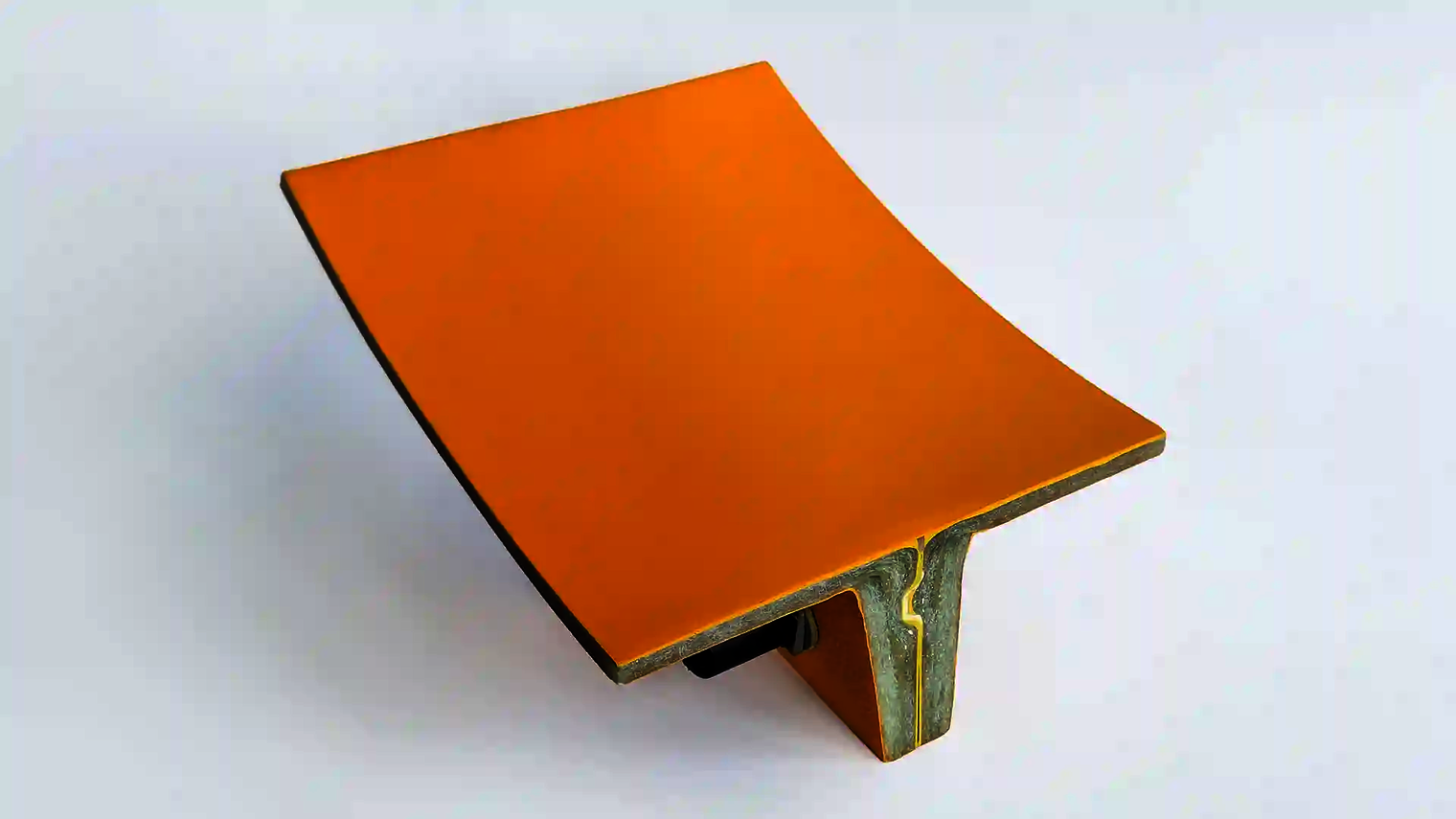
In hard jointing, the transitions between the individual GRP elements are permanently bonded together using hand-laminated GRP mats. This creates a seamless slip-resistant surface with exceptionally high slip resistance.
The color-matched joints are barely noticeable and contribute to the high-quality appearance of the entire facility. At the same time, hard jointing is characterized by a long service life. When properly installed, the joint typically has the same service life as the slide itself.
Since no elastic sealants are used, there are no joints that need to be replaced on a regular basis. Furthermore, the smooth surface facilitates cleaning and meets high standards for hygiene and maintenance.
Particularly suitable for:
- Body slides with high requirements for sliding comfort
- Premium facilities with a focus on durability and a high-quality appearance
- Operators who wish to minimize ongoing maintenance costs
Please note: The more complex installation process results in higher initial investment costs compared to soft-joint installation. Repairs, expansions, or modifications to the facility are generally possible but require greater technical effort and should be performed by qualified professionals.


Flexible Jointing
In soft jointing, the joints between the FRP elements are sealed with a special silicone sealant. This creates a flexible connection that can better accommodate structural movements and potential settlement.
Soft joint sealing is particularly appealing due to its lower upfront costs and straightforward maintenance. Repairs can be carried out quickly and are significantly less labor-intensive than with hard joint sealing.
However, since sealants are subject to natural aging processes, the joints must be inspected regularly and replaced as needed. Additionally, the joints may be noticeable, particularly on body slides.
Particularly suitable for:
- Tire slides
- Projects with a limited investment budget
- Facilities where regular maintenance is scheduled
Please note: Since sealants are subject to natural aging processes, regular inspections and replacement of the joints at specific intervals are required. This results in higher maintenance costs over the entire service life. In addition, the transitions between the individual slide elements—especially on body slides—can be felt during use.


Is there already a water slide in operation?
Does your water slide need new grouting or a professional inspection of existing joints? In the Service & Maintenance section, you’ll find more information on inspections, renovations, and repairs of hard and soft grout joints.
Service & Maintenance
The Best Choice of Materials
Choosing the best material for your water slide depends heavily on various factors, including the intended use, the existing water slides, and the selected products. Generally, there are two main materials to choose from: stainless steel and fiberglass-reinforced plastic (FRP). For outdoor pools and swimming facilities, stainless steel slides are often the preferred choice. Stainless steel is not only extremely durable and long-lasting but also easy to maintain, making it ideal for frequent use in public swimming pools. In water parks and on cruise ships, however, custom-designed GRP slides are recommended. GRP is ideal for locations where an eye-catching, custom-made slide enhances the overall experience.
Ultimately, the choice of material for your water slide depends on the specific needs of your location as well as your aesthetic and functional requirements.
Costs and Purchase
The Costs for a water slide vary depending on the product, location and scope of the provided services. A simple indication of costs is not feasible, as each project is individually evaluated and offered. The construction costs can be broken down into different services in order to enable a detailed cost statement.
The costs depend on several factors, including the following ones:
- Size and length of the slide
- Material (stainless steel or FRP)
- Additional functions (for example: LED Light Effects, Virtual Reality)
- Location and installation effort
For an individual offer we create a tailor-made calculation.
Upon request, when purchasing a water slide, the customer not only receives the slide itself, but also stairs, towers, start and run area as well as potential special effects. The delivery also includes the entire planning documents and, of course, the applicable guarantees. In addition, a TÜV certificate for operational readiness can be issued. Static calculations and technical requirements for water technology are planned by us while the foundations as well as the water technology are usually provided by the customer.
Choosing between FRP and Stainless steel depends on many factors. Although stainless steel can be slightly more expensive to purchase, the follow-up and maintenance costs are much lower, and the service life is longer than that of GRP when properly maintained. On the other hand, FRP moulds can be shaped individually and also offer a higher degree of design freedom in terms of visual presentation. This can be a key success factor. For this reason, it is not clear which material is the best choice.
Stainless steel is almost maintenance-free if it is used and cared about properly. FRP on the other hand, is more susceptible to damage from sunlight and mechanical wear. For this reason, an annual maintenance is mandatory. As a consequence, stainless steel offers advantages in terms of maintenance costs as well as in terms of durability.
Yes, Wiegand water slides are sold worldwide. We are in many countries, from China to Cuba, and have an extensive network to for the global distribution and installation of the slides. From here you can reach our Reference Projects.
If you purchase a water slide, the construction situation on site is the first criterion determining what is feasible. It is important to select the correct product, check the statics and construction options, calculate the production times and construction costs and finally plan the implementation. A careful planning and a consideration of all factors is critical to the success of the project. For this reason, professional advice and concrete planning is recommended.
Our slides are designed to have a long service life and low maintenance costs. Their profitability depends on the number of visitors, water and energy costs as well as maintenance costs.
The payback period depends on the operating costs and on the frequency of visitors. The operators usually expect a payback period of around 5 years.
Yes, in addition to water slides, we also manufacture Dry Slides made of stainless steel, including, for example, escape slides, playground slides, large slides and much more. The areas of application range from amusement parks to shopping centres to office buildings. Go directly to the manufacturer of dry slides: www.wiegandslide.de

We will be happy to advise you on your waterslide project and prepare an individual offer. The maintenance work is also part of our service.